
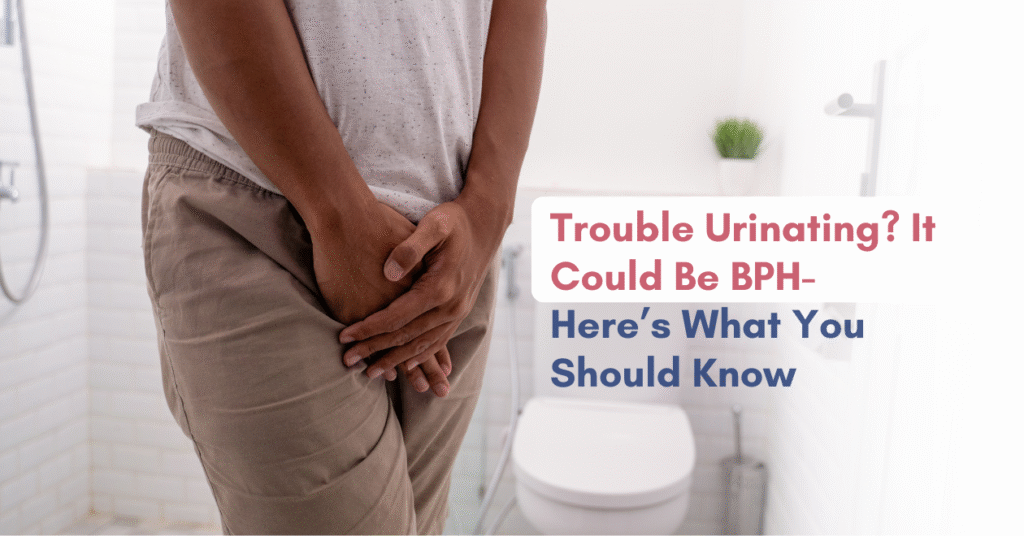
Many men experience difficulty while urinating as they grow older. Some ignore it, assuming it is “normal with age.” But frequent urination, a weak stream, or discomfort during urination can be signs of Benign Prostatic Hyperplasia (BPH) — a common condition that affects the prostate gland. Although it is not cancer, it can affect your daily life and may lead to complications if untreated.
This guide explains what BPH is, why it happens, what symptoms you should look out for, and when it’s time to see best urologist in Kachiguda Hyderabad at Sree Maatre Gastro & Urology Clinic, Kachiguda, Hyderabad.
What is BPH?
BPH stands for Benign Prostatic Hyperplasia, which means the prostate gland becomes enlarged but remains non-cancerous. The prostate sits just below the bladder and surrounds the urethra — the tube through which urine passes out of the body.
When the prostate grows bigger, it presses on the urethra. This pressure makes it harder for urine to flow normally. BPH is very common in men above the age of 50, but symptoms may start even earlier. Many people search for prostate enlargement treatment Hyderabad because the condition becomes more noticeable with age.
Why Does the Prostate Enlarge?
There is no single cause, but doctors believe BPH develops due to:
- Hormone changes with age: As men get older, testosterone and estrogen levels shift, which affects prostate growth.
- Family history: If your father or brother had prostate issues, you may be at higher risk.
- Lifestyle factors: Sedentary lifestyle, obesity, high blood pressure, and diabetes may also contribute.
- Natural aging: Prostate enlargement is simply more common as men age.
Common Symptoms of BPH
The symptoms usually start slowly and worsen over time. The most common signs include:
1. Difficulty starting urination: You may feel the urge to urinate, but the flow takes time to begin.
2. Weak or interrupted urine stream: The flow may stop and start or feel too weak.
3. Frequent urination: Especially during the night (nocturia). This can disturb sleep and cause fatigue.
4. Feeling of incomplete emptying: Even after going to the bathroom, you may feel like the bladder is not fully empty.
5. Dribbling at the end of urination: Drops of urine may leak after you finish.
6. Sudden, strong urges to urinate: This may make it difficult to control your bladder.
7. Pain or burning (in some cases): While not always present, it can happen if there is infection or irritation.
If you notice two or more of these symptoms regularly, visit the best urology clinic in Kachiguda for evaluation.
Why You Should Not Ignore BPH
If BPH is left untreated, the constant pressure on the bladder can cause:
- Recurrent urinary tract infections
- Bladder stones
- Kidney problems
- Sudden inability to urinate (urinary retention)
- Bladder damage due to overworking
Early diagnosis can prevent these complications.
How BPH is Diagnosed
A urologist will evaluate your symptoms and may recommend:
- Physical examination: Including a prostate check.
- Urine test: To rule out infection or blood in the urine.
- Ultrasound: To assess the size of the prostate and bladder health.
- PSA test: A blood test to check prostate-specific antigen levels.
- Uroflowmetry: Measures how strong your urine flow is.
These tests help confirm the condition and guide treatment.
When Should You See a Urologist?
Book an appointment immediately if you notice:
- Sudden inability to urinate
- Blood in urine
- Recurrent burning sensation
- Severe nighttime urination
- Persistent weak stream
Early care from a top urologist in Kachiguda Hyderabad helps protect your kidney and bladder function.
Get Expert Help at Sree Maatre Gastro & Urology Clinic
If you are facing trouble urinating or noticing any other prostate-related symptoms, don’t wait for it to worsen. The urology team at Sree Maatre Gastro & Urology Clinic, Kachiguda, Hyderabad, provides accurate diagnosis and advanced treatment for BPH and other urinary problems.
Book your consultation today: 📞+91 63011 85607
Taking action now can help you regain comfort, confidence, and better urinary health.